The Vulnapocalypse Has Begun: Knowing What to Patch First Is Now a Leadership Job
By Jean-Yves Pasquier on
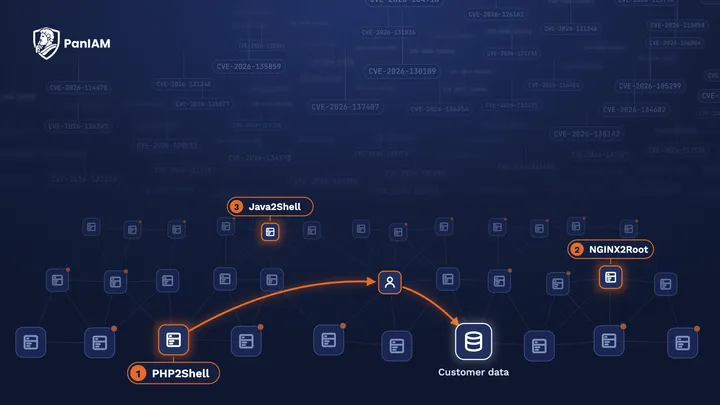
In under a month this autumn, three of the most widely used building blocks of the web each turned out to have a flaw that could let anyone on the internet run their own code on a server, without a password. PHP in October, then Java and nginx in the same week of November. On the latest version of the industry’s severity scale (CVSS 4.0), each scores 9.2 out of 10.
For your teams, that meant three emergencies in a row. For you, it is a preview. AI is making flaws like these faster and cheaper to find. The organizations that come through the next two years well will not be the ones that patch everything, because nobody can. They will be the ones that know, within hours, which machines to fix first and what to do with the ones they cannot fix yet.
Three Flaws, Three Different Answers
PHP2Shell (October 20). PHP runs a large share of the world’s websites, WordPress among them. Details of its two flaws became public on October 20, a day before PHP’s scheduled fix. Sophos reports that Amazon had already seen an exploitation attempt on October 17, and watchTowr saw the flaws exploited on October 21, the day the fix shipped. On October 26, CISA added both to its catalog of known exploited vulnerabilities. PHP published temporary mitigations, but its own advisory was clear: “There are no complete mitigations, updating is the only safe choice.” Then the fix itself proved incomplete: on November 19, PHP shipped another round of releases, and servers on PHP 8.3 to 8.5 had to be patched a second time. The answer: patch now, then check that the patch held.
NGINX2Root (November 18). In Netcraft’s September survey, nginx served more than 225 million sites. Its most serious flaw had sat in nginx’s HTTP/2 code since 2015, and two security firms, Xint and Rapid7, each say they found it. Rapid7 has published a proof-of-concept exploit: code that demonstrates running commands on a vulnerable server without a password. As of November 19, no exploitation had been reported. And a workaround exists: according to Xint, turning HTTP/2 off blocks the two most serious flaws, at the cost of breaking the services that need it. The answer: patch fast, and use the workaround wherever the business can live without HTTP/2 for a while.
Java2Shell (November 17). Calif, the firm that disclosed it (and calls it Java4Shell), says it used AI to find it: “Codex found the bug within an hour.” The flaw reaches only servers with recent Intel and AMD processors: ARM servers such as AWS Graviton are not affected. Calif reports running code without credentials on Jira, Confluence, Jenkins and Keycloak, though CISA had not listed the flaw as exploited by November 23. Many products ship their own copy of Java, Jira and Jenkins among them, so updating the Java your teams installed is not enough. Until a fixed build is in place, Calif lists a single setting that switches off the faulty code. The answer: find the machines it really reaches, and apply the setting wherever no fix exists yet.
All three flaws score the same on that scale. The score says how bad a flaw can get. It does not say what to fix first in your estate. That depends on facts only your organization holds: which machines run the flawed software, which of them the internet can reach, and what each of them can access.
The New Normal
On April 10, members of Anthropic’s Security Engineering and Research teams published Preparing your security program for AI-accelerated offense. Their premise: AI is rapidly reducing the resources, time and skill it takes to find and exploit software flaws, and within the next 24 months, AI models will find vast numbers of bugs that sat unnoticed in code, possibly for years. Their advice to security programs is blunt: “Plan for an order-of-magnitude increase in finding volume.”
This autumn fits that forecast. Calif says it used AI to find Java2Shell, as it had for PHP2Shell, and Xint says a fully automated scan found four of the five NGINX2Root flaws. Two firms finding the same decade-old nginx flaw on their own shows how many eyes, human and machine, are now on the code you run.
In April, we wrote that flaws now get exploited faster than most organizations can patch them. Anthropic recommends patching internet-facing applications within 24 hours of an exploit becoming available. PHP2Shell shows how tight that is: Amazon saw an exploitation attempt four days before the fix shipped, so the clock was running before there was anything to install.
Where to Invest
Ten times more findings cannot be met with ten times more engineers. The investment that pays is in knowing, deciding and acting faster:
- An inventory you can trust. In Anthropic’s words, “you cannot defend systems you don’t know about.” That includes the software inside the products you buy: Java2Shell sat in Jira and Jenkins, not only in the Java your teams installed.
- The context to rank. Which flaws are exploited today (CISA’s Known Exploited Vulnerabilities catalog), which are likely to be (EPSS, a daily estimate of the chance that a flaw is exploited in the next 30 days), which vulnerable machines face the internet, and what each one can reach. Anthropic’s advice is to patch the first list immediately and work through the rest by likelihood.
- A fast lane for change. Anthropic again: “A two-week change-approval cycle for production patches is itself a security risk.” Agree on emergency changes and automatic patching before the next flaw, not during it.
- Workaround decisions, made in advance. Switching off HTTP/2 or a Java feature is a business trade-off. Decide who can make that call, and for which services, while nothing is on fire.
- Limits on what a breach can reach. Some flaws will be targeted before a fix even exists, as PHP2Shell was. The less each machine can access, the less its takeover costs.
This is not only the CISO’s problem. Once you become aware of a personal data breach, the GDPR asks you to notify your regulator without undue delay and, where feasible, within 72 hours, unless the breach is unlikely to put people at risk (Article 33). The notification must describe, where possible, the categories and approximate number of people concerned. If a PHP2Shell server is taken over on a Friday night, the first question on Monday is which personal data that server could reach. Few organizations can answer it from one place. We covered the regulatory side in NIS2: From Compliance to Competitive Advantage.
How PanIAM Helps
Ranking a flood of flaws takes two answers. PanIAM gives both, in one place.
Which machines carry a flaw that is being exploited. PanIAM scans the servers, containers and functions in your cloud for vulnerable software, and checks every flaw against live exploitation data: the CISA catalog and the EPSS probability. For a flaw like PHP2Shell, you see every machine that carries it, the package at fault and the version that fixes it, with the machines ranked by their risk of being compromised.
Which one to fix first. Two machines with the same flaw don’t pose the same risk. PanIAM’s graph follows each machine’s identities to everything they can access, directly or through a chain of steps: customer databases, payment keys, admin roles. A web server one step from your customer data comes before an identical one that reaches nothing.
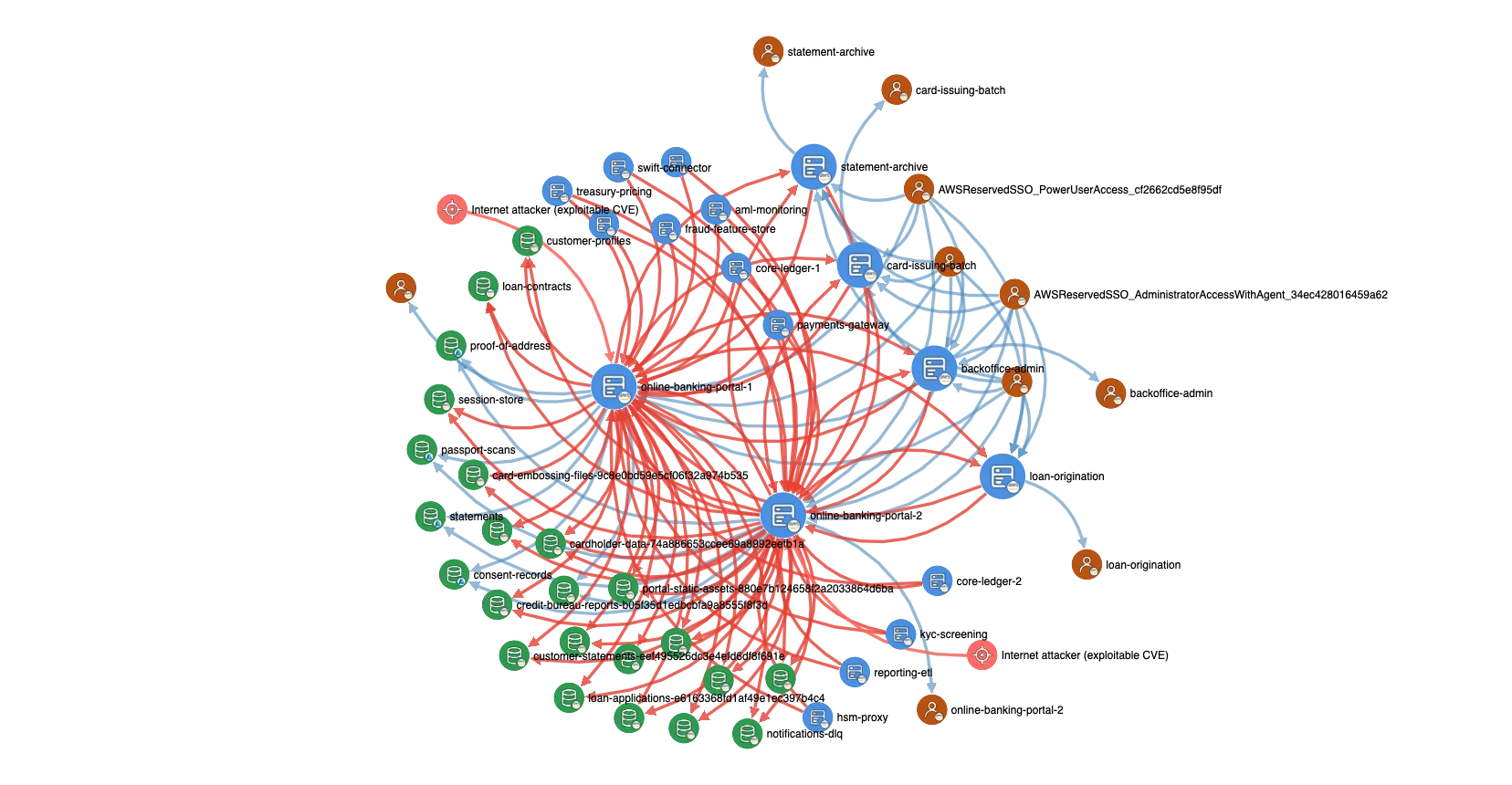
In this demo bank, the two web portals that carry an exploitable flaw reach dozens of data stores, from passport scans to cardholder data: they are the machines to fix first. Every fix, whether a package upgrade or an access change, is ranked by how much risk it removes, so your teams work down one list instead of three. And when a patch cannot ship yet, because the vendor has not released one or the change window is days away, the graph shows the other lever: the access to remove, so that the machine reaches nothing that matters while you wait.
The next critical flaw is already being found. The question for your organization is whether, on the day it goes public, you can say within hours which machines matter and what to do about each. If you want that answer for your own cloud, get secure now.
Related posts



Stay Tuned
We write about attack paths, what's worth fixing first, and the new risks AI agents bring to your cloud, every two weeks.
Subscribe Now